Following the Giants: How to Track Large-Scale Crypto Movements and Position Yourself Ahead of the Market
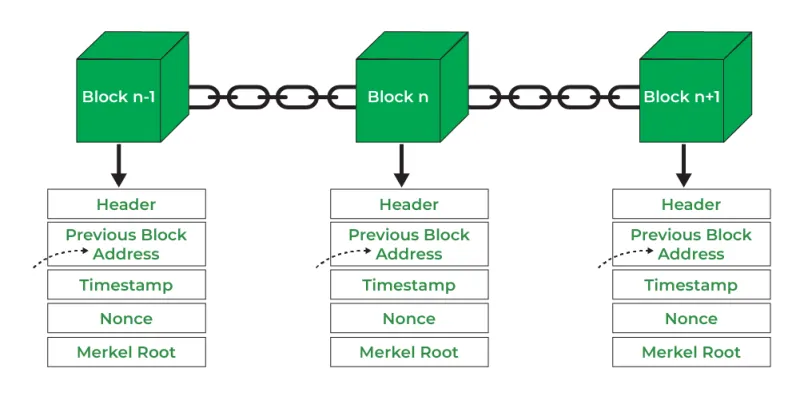
Photo: blockchain data analysis whale crypto market tracking charts, via media.geeksforgeeks.org
In traditional financial markets, institutional investors move quietly — routing orders through dark pools, splitting positions across brokers, and timing entries to minimize slippage. Cryptocurrency markets offer no such anonymity. Every transaction is recorded on a public ledger, visible to anyone with the patience and tools to read it. For the disciplined bettor operating on a platform like Hello88 Pro, that transparency is not a curiosity — it is a competitive advantage.
Understanding how to identify and interpret large wallet movements across decentralized betting ecosystems can meaningfully inform your strategy before price shifts or liquidity events register in retail-facing markets. This guide explains how to build that capability systematically.
Why Whale Behavior Matters in Crypto Betting Contexts
The term "whale" refers to any wallet — or coordinated cluster of wallets — controlling a disproportionately large share of a given asset or liquidity pool. In decentralized betting environments, these actors do not merely hold tokens passively. They provide liquidity, influence odds through volume, and occasionally exit positions in ways that cascade across the broader market.
When a whale repositions a significant holding — say, moving a large quantity of a betting-native token from a cold wallet to a decentralized exchange — that movement often precedes a liquidity event, a protocol vote, or a major market shift. Retail participants who notice the signal after the fact are left reacting. Those who identify it early can position themselves with greater precision.
The critical insight here is not that you are predicting whale behavior. You are observing it and responding intelligently.
Building Your Monitoring Stack
Blockchain Explorers as Primary Intelligence Sources
Etherscan, BscScan, Solscan, and their equivalents for other chains are the foundational layer of any whale-tracking operation. These platforms allow you to view wallet balances, transaction histories, token flows, and smart contract interactions in real time.
Begin by identifying wallets associated with known high-volume betting protocols. Many decentralized sportsbooks and prediction markets publish their treasury or liquidity pool addresses publicly. Bookmark these and monitor them regularly. When an unusually large withdrawal or deposit occurs — particularly one that does not correspond to typical operational patterns — that is worth investigating further.
Most advanced users create a watchlist of twenty to forty addresses spanning protocol treasuries, known arbitrage wallets, and historically active large holders. This watchlist becomes your early warning system.
Whale Alert Tools and Aggregators
Manual monitoring is time-intensive. Platforms such as Whale Alert, Nansen, and Arkham Intelligence automate the detection of significant on-chain movements and deliver alerts through web dashboards, Telegram channels, or API integrations.
Nansen, in particular, is worth the investment for serious practitioners. Its wallet labeling database assigns behavioral tags — "smart money," "DEX trader," "NFT whale" — based on historical transaction patterns. When a wallet flagged as smart money begins accumulating a betting-adjacent token, that signal carries substantially more weight than an anonymous large transfer.
Arkham Intelligence adds a social layer, allowing community members to submit wallet identification hypotheses. While not infallible, it has proven useful for attributing previously anonymous wallets to known entities, including exchanges, funds, and protocol teams.
Interpreting What You See: Signal vs. Noise
Not every large transaction is actionable. A significant portion of whale-scale movements represent routine treasury management, protocol maintenance, or cross-chain bridging with no directional intent. Learning to distinguish signal from noise is where most beginners struggle — and where experienced practitioners earn their edge.
Several patterns are worth isolating:
Accumulation prior to protocol announcements. If multiple large wallets begin acquiring a specific token in the seventy-two hours preceding a governance vote or product launch, that coordinated behavior may reflect advance knowledge or informed speculation. Cross-reference transaction timestamps with protocol announcement schedules.
Sudden liquidity withdrawal from betting pools. When whales pull significant capital from a decentralized sportsbook's liquidity pool without an obvious market-wide trigger, it can signal anticipated volatility or a loss of confidence in the protocol. This is particularly relevant when the withdrawal occurs across multiple wallets in a short window — a pattern consistent with coordinated exit behavior.
Token migration between chains. As multi-chain betting ecosystems expand, large holders frequently bridge assets between Ethereum, Arbitrum, Base, and Solana. Monitoring bridge contracts for outsized activity can reveal where institutional capital is flowing before that migration is reflected in token prices.
Translating On-Chain Intelligence Into Betting Decisions
Observing whale activity is only the first step. The more sophisticated challenge is translating that observation into a disciplined betting posture.
Consider a scenario where your monitoring stack identifies a cluster of large wallets moving a substantial quantity of a prediction market's native governance token onto a major exchange. This pattern is consistent with preparation for a sell event. A prudent response might include reducing exposure to positions denominated in that token, tightening stop-loss parameters, or temporarily shifting liquidity to stablecoin-denominated instruments.
Conversely, sustained accumulation by wallets with strong historical returns — identifiable through Nansen's smart money filters — may justify increasing your own exposure ahead of an anticipated catalyst.
The key discipline here is proportionality. Whale signals inform your positioning; they do not replace independent analysis. A large wallet accumulating a token may be wrong. A protocol may fail to deliver on its roadmap. Always maintain appropriate bankroll management regardless of how compelling the on-chain narrative appears.
Privacy Considerations and Ethical Boundaries
It is worth addressing a point that sometimes goes unexamined in this space. Tracking on-chain activity is entirely legal and transparent by design — the data is public, and no individual's identity is being compromised when you monitor wallet addresses. What you are observing is pseudonymous transaction data on a permissionless network.
However, responsible practitioners distinguish between observation and manipulation. Using on-chain intelligence to front-run a specific individual's known private wallet, particularly when that individual's identity is established through non-public means, enters ethically problematic territory. The strategies described in this article operate entirely within public data environments.
Integrating Whale Intelligence Into Your Hello88 Pro Workflow
For members of Hello88 Pro, the value of on-chain intelligence compounds when layered alongside the platform's premium analytics and market access features. Whale signals are most useful when they align with broader market conditions you are already tracking — not as standalone triggers, but as confirmation or contradiction of an existing thesis.
Develop a weekly review cadence. Survey your watchlist addresses, cross-reference any notable movements against the broader macro environment, and update your positioning accordingly. Over time, pattern recognition improves significantly, and the gap between your reaction speed and the retail market's widens in your favor.
The blockchain does not lie. The question is whether you are reading it carefully enough to act on what it reveals.